
P K Mishra, a retired IAS officer of the Gujarat cadre, is currently serving as the principal secretary to the prime minister.

Indian real estate market remained buoyant in January-June this year, with housing sales hitting an 11-year high at 1.73 lakh units and office demand at a record 34.7 million square feet across eight major cities, according to Knight Frank. On an annual basis, housing sales rose 11 per cent to 173,241 units while leasing of office space grew 33 per cent to 34.7 million square feet during January-June this year across eight major cities. Shishir Baijal, chairman and managing director, Knight Frank India, said, "India's real estate market has been buoyant in the last few quarters owing to the strong economic fundamentals and stable socio-political conditions."

Institutional investments in Indian real estate have seen a strong start to 2025, with inflows reaching $ 1.3 billion in the first quarter - a 31 per cent year-on-year (YoY) increase. This growth was primarily driven by domestic investments, which accounted for 60 per cent of the total inflows during the quarter. With $ 0.8 billion inflows, domestic investments saw a 75 per cent annual rise and were largely focused on industrial & warehousing and office segments.

At a time when the government is nudging the private sector to ramp up its capital expenditure (capex), the Ministry of Statistics and Programme Implementation (MoSPI) is poised to kick-start the first-of-its-kind annual survey on the status of private sector capex from next month. "The inaugural edition of the annual exercise will start in October and will be completed by December. "The results will be made public by February next year," said Geeta Singh Rathore, director general, National Sample Survey Office (NSSO), at a data users' conference on Thursday.

The 31st meeting of the Goods and Services Tax (GST) Council, held in December 2018, deferred a decision to reduce the GST rate for cement from 28 per cent to 18 per cent. This was despite recognising that cement - along with automobile parts - remained among the few mass-consumption items still taxed at the highest slab, which was originally meant for luxury and sin goods.

Increased allocation to NHAI would mean better road connectivity across the country, thus enhancing the trade flow.

India has remained obsessed with cheap capital and infrastructure spending when instead the central constraint on Indian development remains the abysmal quality of Indians' skills, says Mihir Sharma.
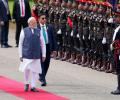
India's concerns over a planned naval exercise between Pakistan and Sri Lanka in the strategically important waters of Trincomalee led to the shelving of the drills weeks ago. The exercise was planned as part of regular engagements between the two navies, but India expressed its apprehensions to the Sri Lankan government. Trincomalee, situated on Sri Lanka's northeastern coast, is considered a significant hub in the Indian Ocean region, particularly for India's maritime security interests. The Pakistani Navy's close cooperation with China's PLA Navy has raised concerns in New Delhi about any Pakistani warship presence in Trincomalee. This incident follows previous diplomatic rows between India and Sri Lanka over the docking of Chinese vessels at Sri Lankan ports. India has been actively supporting Sri Lanka's development of Trincomalee's energy infrastructure and has recently signed a defense pact with the country to boost military cooperation.

The most striking features of this Budget was its focus on simplification and improving the ease of doing business in India, asserts Kaku Nakhate.

'In the new coalition government, India's reform agenda may prioritise job creation and factor market reforms.'

'Why has Maharashtra slipped up over the past couple of decades?' 'Not only is this question critical for residents of the state, but given that it accounts for 14% of India's GDP, a faster-growing Maharashtra implies a faster-growing India as well, point out Shishir Gupta and Rishita Sachdeva.

Both the government and RBI have to complement each other if the economy has to revive quickly.

Finance Minister Nirmala Sitharaman on Thursday made a modest increase of 11 per cent in capital expenditure (capex) to Rs 11.11 lakh crore for the next financial year as private investment picks up. The government had hiked capex by 37.5 per cent to Rs 10 lakh crore for the current fiscal. Against this, the government expects to spend Rs 9.5 lakh crore in the financial year ending March 2024.

'Rather than taking a very short-term view on the markets, equity investing should be premised on longer term growth opportunities.'

'If weak indicators persist, there is a risk that India could slip into a prolonged slowdown similar to the one experienced between 2014 and 2019,' warns Debashis Basu.

Among the cities that have fully implemented their projects are Agra, Varanasi, Madurai, Coimbatore, Udaipur, Pune, Surat, and Vadodara

President Droupadi Murmu, in her address to the nation on Republic Day, advocated for the "One Nation One Election" initiative, emphasizing its potential to enhance governance and reduce financial burdens. She highlighted the government's efforts to eliminate remnants of colonialism, citing the replacement of British-era criminal laws with modern alternatives. Murmu also lauded India's economic progress, stressing the importance of inclusive growth and social welfare. She urged citizens to remember the sacrifices of freedom fighters and reaffirmed the significance of the Constitution in guiding India's journey towards a prosperous and equitable future.

All the global transitions are working in India's favour, giving it the potential to become a force in today's uncertain world, but one of the country's biggest challenges is inclusive growth, Tata Sons chairman N Chandrasekaran said on Monday. In his address at the JRD Tata Oration, the head of the Tata group also asserted that Artificial Intelligence (AI) is here to stay and it will be beneficial if India prepares for it. Post the cold war era of relative stability and prosperity, the world appears to have given way to unpredictable conflicts and economic uncertainty, he said, adding that the pandemic resulted in supply chain shocks of gigantic proportion.

India will need to grow at an average 7.8 per cent to become a high-income country by 2047, a World Bank report said on Friday. To achieve this goal India would require reforms in financial sector as well as in land and labour market, the World Bank said in its India Country Memorandum titled 'Becoming a High-Income Economy in a generation'.

Kant, a retired 1980-batch Indian Administrative Service (IAS) officer of Kerala cadre, was appointed as India's G20 Sherpa in July 2022, months before India assumed the G20 Presidency.

The growth was primarily driven by domestic investments, which accounted for 60 per cent of the total inflows during the first quarter of the financial year.

Office space owners are looking at good times ahead as rentals are expected to rise due to demand for Grade A office spaces outpacing supply that has been sluggish due to construction delays, long gestation periods and developers' interests shifting to residential.

Finance Minister Nirmala Sitharaman on Tuesday asked fintech firms to focus on risk management at a time when criminals are using AI to mimic voices, clone identities and create lifelike videos to manipulate people.

'Despite being a software powerhouse, we're not producing proportionate original IP, frameworks, or global tech products originating in India.'
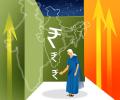
India no longer needs big ticket reforms but small and basic ones to drive the growth forward, Chief Economic Advisor V Anantha Nageswaran said on Monday. Addressing the media after the Economic Survey 2023-24 presented in Parliament, Nageswaran said there is a need to pursue all possible approaches without any ideological orientation. "In terms of the kind of reforms that we need to do, it is no longer big-ticket reforms that dominate your front pages but more about grunt works.

'When the average growth in the last three years was just 2.5%, how does that make us the fastest growing country?' 'They only tell you what has happened in the last 2 years; they are not taking into account what happened in FY21 on account of their mistakes.'

Housing sales rose 7 per cent annually in 2024 across eight major cities to reach 12-year high at 3,50,613 units on better demand for premium homes amid stable mortgage rates and strong economic growth, according to Knight Frank. Last month, real estate consultant Anarock, however, had reported that housing sales declined 4 per cent in 2024 to nearly 4.6 lakh units across seven major cities.

Sinha said the inauguration of the Kashmir rail service has connected the hearts of the people of Jammu and Kashmir with the rest of the country and will pave the way for the economic prosperity of the region.

India appears poised to sustain its growth in a more durable way than before with the economy carrying the momentum from FY23 into the current fiscal year, the Annual Economic Review for 2022-23 released by the finance ministry on Thursday said. However, the report cautioned that escalation of geopolitical stress, enhanced volatility in global financial systems, sharp price correction in global stock markets, a high magnitude of El-Nino impact, and modest trade activity and FDI inflows, are factors that could constrain the pace of growth. "Should these developments deepen and dampen growth in the subsequent quarters, the external sector may challenge India's growth outlook for FY24," the finance ministry said.

Dalal Street minnows stole the show in 2024, giving handsome returns to investors, helped by a largely optimistic trend in the stock market and impressive retail investors' participation. Analysts attributed the positive trend in the equity markets, where the benchmark indices shattered many records this year, to robust domestic liquidity, strong fundamentals of the Indian economy, and policy continuity.

'The touchstone is reciprocity which will be applied to friends and foes alike.' 'It will be a bitter pill to swallow.'

The employment situation remains dire. Whatever can be done to promote greater low-skill employment should be pursued aggressively, advises former chief economic adviser Shankar Acharya.

Amid imminent phasing out of the fiscal stimulus by US Federal Reserve, Prime Minister Manmohan Singh on Wednesday called for an "orderly exit" from unconventional monetary policies being pursued by the developed world for the last few years to avoid damaging growth prospects of the developing world.

RBI's interest rate decision, quarterly earnings and global cues would be the major driving factors for equity markets this week, analysts said adding that the impact of the Union Budget could linger on this week. Trading activity of foreign investors will also be a key driver for the markets, experts noted. "US and India's manufacturing PMI for January to be released on Monday, will be the key macro data to watch out for.

'There's a misconception that all Rs 1 lakh crore will be spent immediately, leading to higher consumption of FMCG goods, travel, and vehicle purchases.' 'While some of this money will go toward consumption, not all of it will.' 'The impact depends on where people deploy their savings.'

Simplifying investment policies at the micro level and introducing a time-bound framework will be critical for India's growth targets, notes Krishna Ella.

The Indian economy is expected to return to the pre-crisis growth trajectory of about 9 per cent in a couple of years.

The substantially increased economic dualism may exert lasting negative influences which could include a reduced potential for economic growth; the persistence of a very weak employment and poverty situation; rising social and political discord; and heightened vulnerability to geopolitical challenges, cautions Shankar Acharya, former chief economic adviser to the Government of India.

US-based Citigroup is likely to allocate more global roles to India than to any other centre it operates in due to the country's strong talent pool, said Jane Fraser, chief executive officer of Citigroup, on Wednesday in an interaction with CNBC-TV18. Fraser also expressed confidence that India will remain the world's fastest-growing economy.

After Chennai, it is Coimbatore, Madurai, and Tiruchirappalli, that are emerging as manufacturing hubs. Coimbatore is India's top Tier-II city in terms of the number of GCCs, according to a report by Cushman & Wakefield.
